
Microgrid Control Strategies for Self-Consumption and Resilience
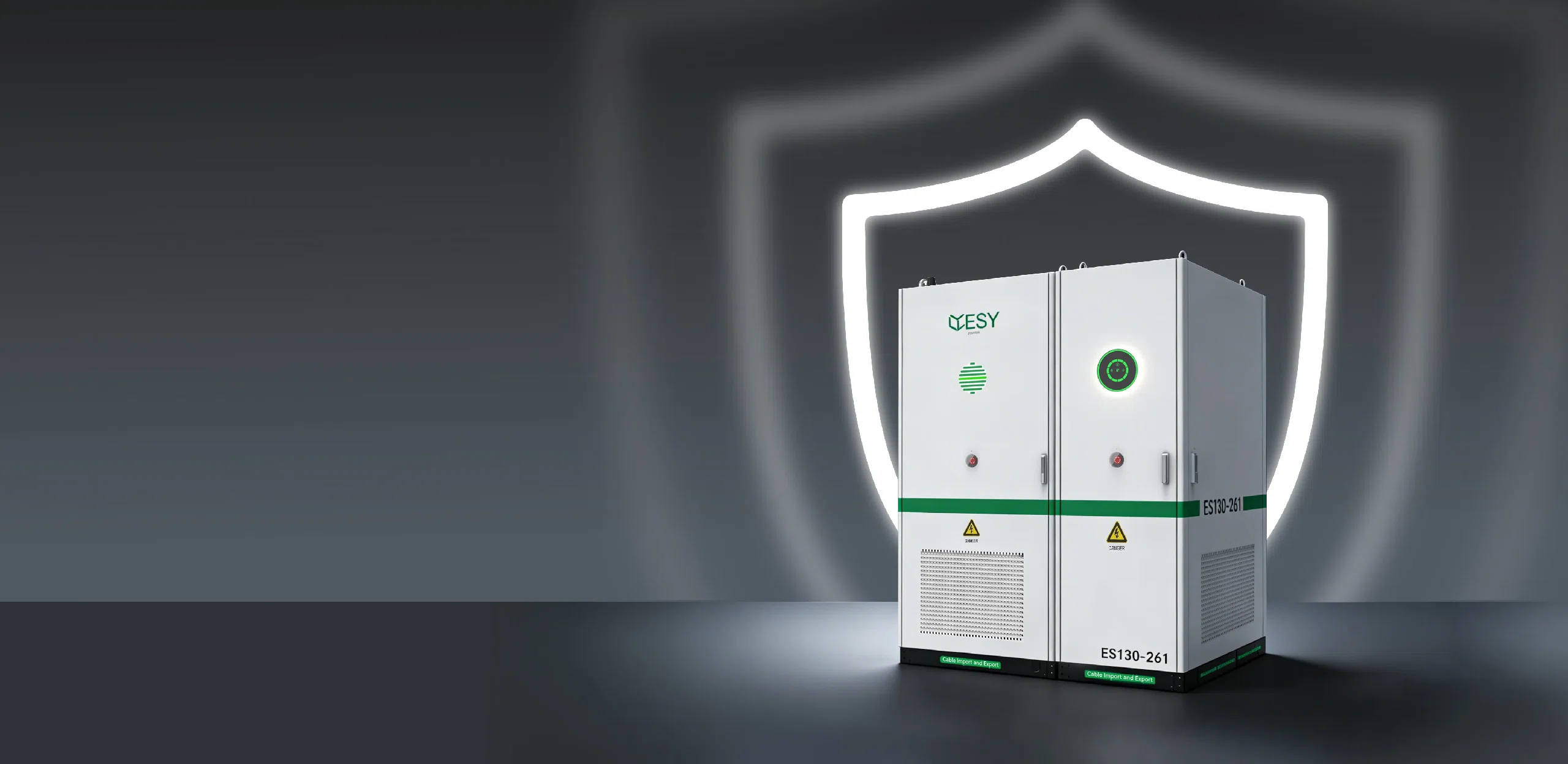
Microgrid control strategies can increase renewable self-consumption from typical 30–40% levels to more than 70–90% by coordinating photovoltaic generation, battery storage, and flexible loads. Advanced controllers such as model predictive control, distributed control, and AI-based management improve grid stability, reduce electricity costs by 10–30%, and maintain operation during outages through islanding and energy scheduling.
Microgrid operation has changed as renewable generation becomes more common in commercial, industrial, and community energy systems. Solar photovoltaic (PV), wind power, battery storage, and controllable loads now require coordinated management because generation and consumption rarely match at the same time. In 2023, global renewable power additions reached more than 500 GW, increasing the need for local energy management methods that can balance electricity production and demand.
A microgrid control system usually combines three functions: power regulation, energy scheduling, and resilience management. Power regulation maintains voltage and frequency stability, energy scheduling improves renewable utilization, and resilience management allows continued electricity supply during grid failures. Well-designed controllers can maintain frequency deviations within ±0.1 Hz in islanded operation under suitable system conditions.
Self-consumption improvement depends heavily on the coordination between renewable generation and storage. Without intelligent control, excess solar electricity is often exported during daytime hours while electricity is purchased from the grid during evening peaks. A residential PV system may consume only 30–40% of its generated electricity locally without storage, while adding optimized storage control can increase this ratio to above 80% in many applications.
“Energy management systems schedule charging and discharging periods according to PV output, electricity prices, load demand, and battery condition rather than using fixed operating rules.”
Battery storage is widely used because it provides short-term energy balancing capability. A modern microgrid energy storage system integrates battery modules, power conversion equipment, monitoring systems, and control software. Commercial systems ranging from 100 kWh to several MWh are commonly deployed for factories, offices, renewable energy plants, and remote facilities.
The control method determines how effectively storage resources are used. Rule-based control remains common because of its simple structure, but it cannot always adapt to changing weather or electricity prices. For example, a fixed charging strategy may charge batteries during periods of low renewable output, reducing renewable utilization. Advanced optimization methods adjust charging schedules according to predicted conditions.
Model predictive control (MPC) is one of the most studied approaches for microgrid energy management. MPC uses forecasting data and mathematical optimization to calculate future operating states. A typical MPC controller may consider 24-hour prediction windows with 15-minute intervals, resulting in 96 scheduling points per day. Research published between 2018 and 2024 reported that MPC-based systems reduced operating costs by approximately 10–30% compared with traditional rule-based methods.
The effectiveness of MPC depends on forecasting accuracy. Solar generation prediction errors of 5–15% are common because weather conditions change continuously. Combining weather forecasting, historical energy data, and real-time measurements allows controllers to update operation plans several times per hour.
Hierarchical control structures are widely applied in microgrids because different control tasks occur at different time scales. Primary control responds within milliseconds to seconds, secondary control restores voltage and frequency, and tertiary control manages economic operation over hours or days.
| Control level | Typical response time | Main function |
|---|---|---|
| Primary control | milliseconds–seconds | Voltage and frequency regulation |
| Secondary control | seconds–minutes | Frequency and voltage restoration |
| Tertiary control | minutes–hours | Energy scheduling and economic operation |
Primary control often uses droop methods because they allow multiple inverters to share power without continuous communication. However, droop control may create small voltage and frequency deviations. Secondary controllers correct these deviations by exchanging information between distributed units.
Distributed secondary control has received increasing attention because it avoids dependence on a single central controller. Studies conducted on laboratory microgrid platforms with multiple inverter units have shown that consensus-based controllers can restore frequency errors by more than 50% compared with systems using only primary control.
The improvement of self-consumption also requires flexible electricity demand. Many commercial buildings contain loads that can shift operating times without affecting daily activities. HVAC systems, water heating equipment, and electric vehicle charging stations are commonly controlled according to renewable availability.
Demand response programs can reduce peak electricity demand by approximately 15–30% in commercial buildings. When combined with battery storage, flexible loads allow microgrids to absorb more renewable energy and reduce electricity purchases during expensive peak periods.
“A building with solar generation, storage, and flexible loads can operate as an active energy participant rather than only a consumer.”
Resilience-oriented control focuses on maintaining electricity supply during external grid interruptions. When a grid outage occurs, the microgrid can disconnect through islanding control and continue supplying selected loads. Hospitals, data centers, military facilities, and remote communities often use this operation mode.
During islanded operation, the controller must quickly balance generation and consumption because there is no support from the main grid. Load prioritization is commonly applied by dividing electricity demand into critical and non-critical categories. For example, emergency equipment may receive continuous supply while non-essential loads are temporarily reduced.
Energy storage capacity strongly affects outage duration. A 261 kWh battery system supplying a 50 kW critical load can theoretically provide more than 5 hours of operation under ideal conditions. Actual duration depends on inverter efficiency, temperature, battery condition, and load variation.
Artificial intelligence (AI) methods are increasingly applied to improve microgrid control. Machine learning algorithms can analyze historical operation data and identify suitable energy schedules without requiring complete physical models. Reinforcement learning (RL) has been studied for battery scheduling, renewable utilization, and islanded operation.
Research from 2020–2024 showed that reinforcement learning controllers could reduce electricity costs by around 5–20% compared with traditional control strategies in simulation environments. However, practical deployment requires reliable data collection, cybersecurity protection, and sufficient training data.
AI-based methods are often combined with traditional optimization approaches. For example, MPC can manage operational constraints such as battery limits and voltage ranges, while machine learning models improve forecasting accuracy. Hybrid approaches are being tested in commercial and industrial microgrid projects.
Cybersecurity has become an important consideration because modern microgrids depend on communication networks. Digital controllers exchange information through sensors, smart meters, and cloud platforms. According to industry reports published after 2021, cybersecurity design has become a standard requirement for many large-scale energy management projects.
Future microgrid development will focus on improving renewable utilization, reducing operating costs, and maintaining reliable electricity supply under changing conditions. Systems combining photovoltaic generation, battery storage, advanced controllers, and flexible loads are expected to become more common in commercial and industrial applications.
With continuous improvements in control algorithms, forecasting methods, and storage technologies, microgrids can achieve higher self-consumption rates while providing reliable electricity during grid disturbances. The combination of intelligent scheduling and resilient operation will remain an important approach for future distributed energy systems.
The daily read for people who actually use the tech.
Hands-on reviews, teardowns, and first-look reporting delivered to your inbox every weekday morning.